Enjoy the image, then ask a different question
A strong wedding photograph can help you recognise a style you love. It cannot, by itself, explain which business created every part of the scene. A planner, venue, florist, rental company, stylist and photographer may each have contributed something different. Use the image to begin a conversation about the role the supplier actually played, rather than filling the gaps with an assumption.
Ask what belongs to that supplier’s service
Choose a small number of portfolio examples and ask the business to describe its contribution in each one. Which parts did it design, supply or carry out? Which involved other professionals? The aim is a clearer understanding of the offering, not an accusation about the photograph. A useful answer helps you connect the work you admire with the service you are considering.
Separate the overall look from the proposed scope
An image may include a room, lighting, flowers, linens, furniture and details that are not all part of one package. Ask which elements are included in your proposal and which would require another supplier or a separate decision. Keep an unpriced inspiration image distinct from the agreed scope. Do not turn an attractive portfolio into an assumed promise about your own event.
Find out who will be involved on the day
Ask which person or team is expected to carry out the work you are discussing. A business may have several people with different responsibilities. Clarify how design decisions, practical setup and client communication are organised, and who answers if an important detail needs attention. Confirm the actual arrangement with the business; this guide does not establish anyone’s staffing or availability.
Discuss the conditions that shaped the example
A garden reception and an indoor dinner may share a visual style while involving different practical conditions. Ask what affected the example you are viewing and what would need reconsidering for your venue, schedule and proposed guest experience. Keep the questions concrete. A past event is useful context, not proof that the same result is available under every set of conditions.
Use a small comparison record
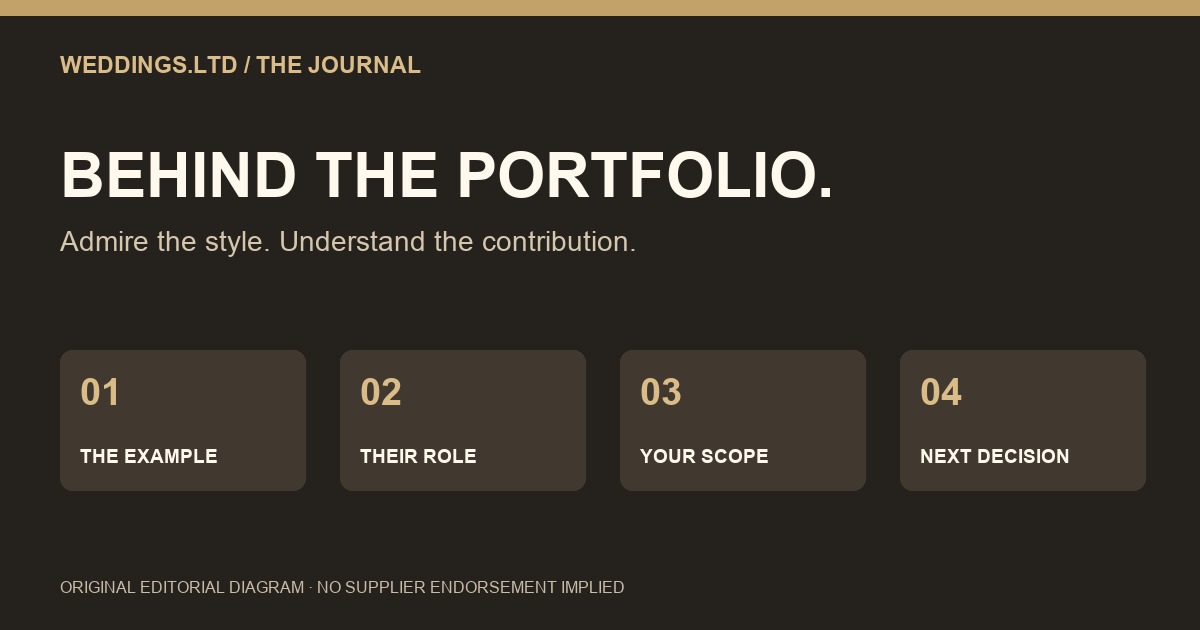
For each shortlisted business, write down four things: the example you discussed, its stated role, your proposed scope and the open questions. Add the date of the conversation and the contact who provided the explanation. This creates a more useful comparison than ranking suppliers by how many photographs you saved. Leave an unanswered point visible instead of replacing it with a guess.
Keep the conversation connected to the proposal
When an explanation changes what you expect, ask the business how that detail will appear in its actual proposal and ordinary approval process. Confirm what still needs a decision. This is a planning and communication exercise, not legal advice about a contract or a guarantee about a supplier’s work. The responsible people must agree the arrangements that apply to your event.
From inspiration to a better enquiry
The purpose of a portfolio is not lost when you ask practical questions. You can appreciate the work and still want to understand the contribution behind it. A clear enquiry gives a good supplier room to explain its strengths, its collaborators and the service it can actually offer. For the next planning step, keep the guest information and the working event schedule equally clear.
Keep planning
Write clear guest information · Build a useful event handover · The journal